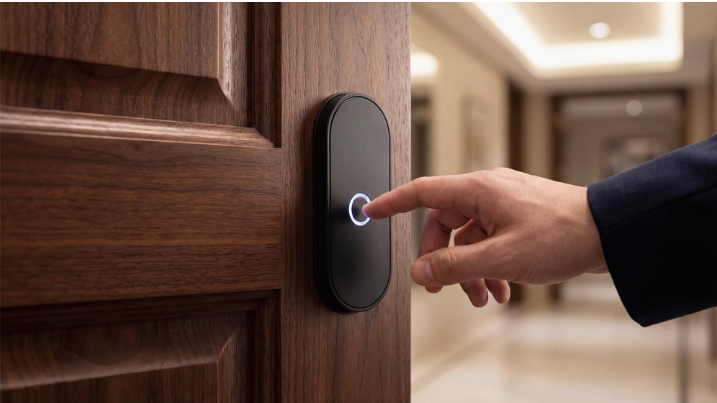
Most of us are still controlling access to our homes with traditional ‘dumb’ locks. These are deadbolts or handle locks requiring keys for access. Lose your keys and you will have to replace the lock or pay a locksmith to re-key it. And if someone needs to get in when you are not home, you need to take time off to provide access.
Smart homes are changing the access control game with newer smart locks. In fact, the smart lock has completely upended how people think of access control. By shifting away from keys in favor of identity-based access, homeowners are experiencing a complete reinvention of how they control who enters their homes.
Keys Are Replaced by Identities
A physical key handles the task of turning a lock’s tumblers to gain access. Physical keys are obviously effective. But they have their drawbacks. Smart locks replace keys with identities. According to Vivint Home Security, a person’s identity can be verified in any number of ways:
- PIN Code – The traditional PIN code is the easiest form of identification. Each member of the household is issued a separate code they can use to lock and unlock the door. As long as family members don’t share their codes with others, access is limited by code identity.
- Fingerprint – Some higher-end smart locks offer access control through fingerprint scans. A fingerprint is a fantastic biometric identifier because it is completely unique. Your finger becomes the credential that verifies your identity and allows you to unlock the door.
- Retina Scan – The retina scan is similar to a fingerprint scan. Your retinas are as unique to you as your fingerprints. So by scanning your eyes, a smart lock can both recognize you and distinguish you from everyone else.
- UWB Tech – Ultra-Wideband (UWB) is being embedded in modern cell phones. The technology makes it possible to use your phone as a digital key to unlock your door. You don’t have to do anything either. Your phone is recognized as you approach the door; it automatically unlocks itself.
A smartphone can also provide access through a mobile app. Imagine pulling into the driveway and parking the car. As you’re grabbing your cell phone from the dashboard mount, you tap a button and the front door automatically unlocks. Nothing could be simpler.
All the key alternatives rely on your verified identity for access. You get superior protection simply because it is more difficult for an unauthorized person to get in without access to your identity. Keys can be lost and stolen. Keys can be replicated by a skilled burglar. Identities are much harder to work around.
The Power of Granular Permissions
Another inherent weakness of the traditional lock is the fact that keys represent an all-or-nothing proposition. If you have a key, you can get in. If you don’t, you can’t. That means you have to pass out keys to service providers that need regular access. Think of the housekeeper, the dog sitter, etc.
Smart locks offer precise access control through granular permissions. For example, you can give your housekeeper a PIN code that only allows access at specific times of the day. Not only is she locked out at all other times, but you can also know whether she has arrived on time for her daily or weekly cleaning just by checking access logs.
Smart locks come with other benefits, like total smart home integration. Including a smart lock in a Vivint Home Security system will allow integration with lighting, temperature control, and even GPS-based programming. Smart locks represent a whole new way of thinking about access control.
